

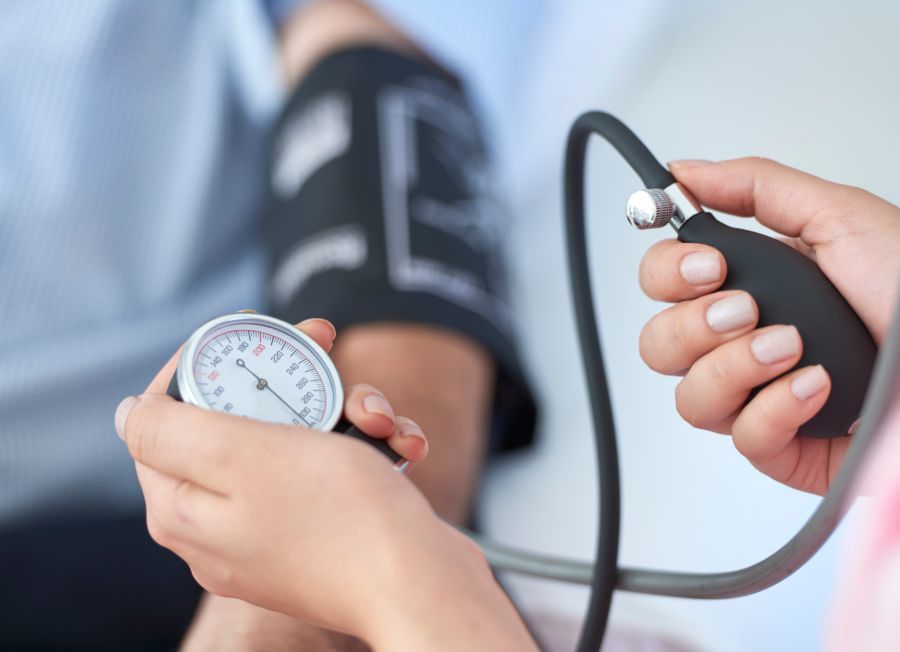
Sit in bumper-to-bumper traffic when you are already twenty minutes late for an important meeting, and you can practically feel your blood pressure surging. Your grip tightens on the steering wheel, your heart thumps against your ribs, and a tight warmth creeps up the back of your neck. If you were to wrap a blood pressure cuff around your arm at that exact second, the digital readout would almost certainly display numbers that could alarm an emergency room triage nurse.
Because these intense physical sensations are so familiar, millions of people assume that high stress and high blood pressure are fundamentally the same thing. When an annual checkup reveals a resting reading of 142/92, the most common instinct is to blame the demanding boss, the chaotic family schedule, or the sleepless workweek. It feels logical: if emotional tension makes your body feel pressurized, surely chronic stress must be the sole architect of clinical hypertension.
Cardiologists and nephrologists see a far more intricate, nuanced picture. While severe stress unequivocally causes violent, temporary spikes in your arterial pressure, whether stress alone can cause permanent, lifelong hypertension is one of the most misunderstood questions in modern cardiovascular medicine.
The Acute Surge: Your Body Under Fire
To understand the connection between emotional turmoil and cardiovascular strain, you have to examine what happens the moment your brain perceives a threat. Whether that threat is an oncoming car or an aggressive email from a client, your body executes the exact same ancient physiological script: the fight-or-flight response.
The amygdala, your brain’s emotional processing center, sends a distress signal to the hypothalamus, which immediately activates the sympathetic nervous system. Within milliseconds, your adrenal glands flood the bloodstream with a surge of catecholamines—primarily epinephrine (adrenaline) and norepinephrine.
These hormones orchestrate an immediate mechanical shift across your entire vascular network:
-
Increased Cardiac Output: Epinephrine binds directly to beta-adrenergic receptors on heart muscle tissue, causing the heart to beat faster and contract with significantly more force.
-
Peripheral Vasoconstriction: Norepinephrine acts on alpha-adrenergic receptors lining your peripheral arteries, causing blood vessels in the skin, digestive tract, and kidneys to constrict tightly.
-
Redistribution of Blood Flow: Blood is aggressively shunted away from non-essential organs and channeled directly toward your skeletal muscles, brain, and coronary arteries.
This sudden combination of more blood being pumped into narrower, more resistant pipes produces an immediate spike in blood pressure. In an acute emergency, this surge is life-saving. It ensures that your brain and large muscle groups have the oxygenated fuel required to fight or flee.
Once the danger passes, your parasympathetic nervous system—the “rest and digest” branch of the autonomic nervous system—is supposed to step in. It releases acetylcholine, dampens sympathetic firing, dilates your blood vessels, and gently coaxes your blood pressure back down to its calm resting baseline.
Spikes vs. Sustained Pressure: The Core Clinical Difference
The fundamental point of confusion for most patients lies in the difference between an acute pressure spike and essential hypertension.
A spike is a dynamic, temporary surge. It occurs when you sprint up a flight of stairs, deliver a high-stakes presentation, argue with a spouse, or watch a suspenseful movie. When the stimulus ceases, your blood pressure returns to normal.
Clinical hypertension, by contrast, is a chronic, non-stop vascular condition. It means that your blood pressure remains pathologically elevated even when you are lying quietly on the couch, reading a peaceful book, or sleeping deeply at 3:00 AM.
Medical experts generally agree that stress alone, occurring in a biological vacuum, does not simply convert into chronic, structural hypertension overnight. If emotional stress were the sole determining cause, high blood pressure would reliably vanish the moment a person went on vacation or left a stressful job. Yet clinical reality consistently demonstrates that taking a patient away from their external stressors rarely normalizes their baseline numbers if underlying vascular damage or metabolic dysfunction has already taken root.
Instead of acting as a standalone, isolated cause, chronic stress functions as an insidious biological catalyst. It does not merely push numbers upward on a screen; prolonged, unremitting stress sets off a cascade of systemic wear and tear that gradually alters how your blood vessels, kidneys, and nervous system operate.
The Hidden Biological Pathways of Chronic Stress
When stress ceases to be a brief episode and transforms into a chronic state of daily living, the parasympathetic nervous system never gets an opportunity to fully reassert control. This sustained autonomic imbalance quietly damages your cardiovascular infrastructure through three primary biological pathways.
The HPA Axis and Cortisol Flooding
While adrenaline drives the immediate, explosive fight-or-flight response, long-term stress triggers the hypothalamic-pituitary-adrenal (HPA) axis, leading to prolonged elevations of the steroid hormone cortisol.
Sustained high cortisol wreaks havoc on blood pressure regulation in subtle ways. It impairs the ability of the endothelial cells lining your blood vessels to produce nitric oxide, the vital signaling molecule responsible for telling smooth muscle tissue in your arterial walls to relax and widen. Without adequate nitric oxide, arteries remain in a state of semi-rigidity. Furthermore, excess cortisol sensitizes blood vessels to the constrictive effects of circulating catecholamines and signals the kidneys to retain sodium and water, expanding your total blood volume.
Baroreceptor Resetting
Embedded within your carotid sinuses and aortic arch are specialized sensory nerve endings called baroreceptors. These sensors monitor the stretch of your arterial walls with every heartbeat, acting as your body’s internal blood pressure thermostat. When blood pressure rises, baroreceptors fire signals to the brainstem to slow the heart rate and dilate blood vessels.
However, when you live in a perpetual state of stress, your blood pressure spikes repeatedly throughout the day. Over time, the baroreceptors adapt to these relentless surges. Instead of fighting to pull your pressure back down to 115/75, the receptors reset their internal set-point upward. They begin to interpret an elevated pressure—such as 135/85—as the acceptable “new normal,” failing to initiate the necessary corrective responses to bring the vascular system back to baseline.
Endothelial Micro-Trauma and Vascular Remodeling
Every time your blood pressure surges under acute emotional stress, the physical velocity and turbulence of blood moving through your arteries increases dramatically. Over years of repeated surges, this mechanical shear stress causes microscopic tears and inflammatory distress in the delicate vascular endothelium.
In response to this continuous low-grade mechanical trauma, the muscular walls of your small arteries and arterioles gradually thicken and stiffen, a process known as vascular remodeling. As your arteries lose their natural compliance and elasticity, they become rigid pipes that cannot expand to accommodate changes in blood volume. At this point, the elevated pressure has become physically locked in by anatomical changes to the blood vessels themselves.
The Behavioral Multipliers: How Stress Pulls the Trigger
Perhaps the most potent way stress drives high blood pressure is through what clinicians call the behavioral pathway. Human beings under severe psychological distress do not live in sterile physiological bubbles; they alter their daily habits in predictable ways to soothe their nervous systems.
Stress rarely causes high blood pressure through pure emotion alone. More often, stress acts as the master conductor that orchestrates a cluster of damaging lifestyle changes, each of which directly attacks cardiovascular health:
-
High-Sodium, Ultra-Processed Comfort Eating: When cortisol levels remain elevated, the brain craves calorie-dense carbohydrates, refined fats, and salt. Grabbing fast food or packaged snacks during high-stress workdays loads the bloodstream with sodium, causing the kidneys to pull extra water into the vascular space, increasing physical fluid pressure against arterial walls.
-
The Sedentary Trap: Exercise is the single best tool for lowering vascular resistance and burning off circulating stress hormones. Yet, when people are emotionally exhausted, physical activity is almost always the first habit discarded. Muscles remain inactive, cellular insulin sensitivity declines, and resting vascular tone increases.
-
Sleep Architecture Collapse: Chronic anxiety and rumination shatter sleep quality. Sleep is the only time your cardiovascular system experiences the nocturnal dip—a natural, restorative 10 to 20 percent drop in blood pressure that gives your heart and blood vessels time to recover. Losing this dip due to insomnia or fragmented sleep is one of the strongest predictors of long-term cardiovascular events.
-
Chemical Crutches: People frequently counter the agitation of stress with depressants like alcohol and counter the fatigue of poor sleep with stimulants like excessive caffeine or nicotine. Nicotine temporarily narrows arteries and damages vessel walls, while regular, heavy alcohol intake directly stimulates the central sympathetic nervous system and induces arterial rigidity.
When you combine chronic emotional arousal with poor sleep, high sodium intake, sedentary living, and alcohol, you have created the absolute perfect storm for essential hypertension. Stress may have lit the match, but lifestyle disruptions provided the fuel.
The Diagnostic Dilemma: White Coat and Masked Hypertension
The volatile relationship between emotional stress and blood pressure creates significant challenges inside the doctor’s office, often leading to misdiagnosis or delayed treatment.
The most famous intersection of stress and blood pressure is white coat hypertension. This occurs when a patient’s blood pressure is completely normal in everyday life, but skyrockets the moment they step into a clinical environment, triggered by subconscious anxiety surrounding medical exams, needle phobias, or fear of bad news. For years, white coat hypertension was dismissed as a harmless quirk. Today, clinicians recognize that while these patients may not need immediate medication, their pronounced cardiovascular reactivity indicates that their blood vessels are hyper-responsive to stress, placing them at higher risk of developing sustained hypertension later in life.
The inverse condition—masked hypertension—is even more dangerous. Masked hypertension describes an individual whose blood pressure appears textbook-perfect when resting quietly in a calm doctor’s office, but climbs to hypertensive levels during their chaotic daily life, driven by high workplace stress, domestic strain, or untreated sleep disorders. Because their clinic readings look pristine, their underlying cardiovascular strain goes undetected, quietly damaging target organs like the kidneys, retina, and heart for years.
This is why a single resting measurement taken in a clinical setting is no longer considered the gold standard for blood pressure evaluation. True assessment requires home blood pressure monitoring or a 24-hour ambulatory blood pressure cuff, which captures how your vascular system responds across the real-world spectrum of sleep, work, exercise, and emotional stress.
Restoring Autonomic Equilibrium
Because the relationship between stress and high blood pressure involves both neurological signaling and physical blood vessel mechanics, managing the condition requires an approach that treats both the mind and the vascular tree. Lowering systemic pressure means actively teaching your autonomic nervous system how to disengage from chronic sympathetic overdrive.
Activate the Vagal Brake Through Respiration
You cannot directly command your heart to beat slower, but you can deliberately control your breathing, which directly influences your autonomic tone. Slow, diaphragmatic breathing at a rate of roughly six breaths per minute stimulates the vagus nerve, triggering the release of acetylcholine and engaging the baroreflex. Practicing slow, structured breathwork for just ten to fifteen minutes each day has been clinically shown to produce measurable, sustained drops in both systolic and diastolic resting pressure.
Build Arterial Compliance with Aerobic Movement
While weightlifting is exceptional for metabolic health, steady-state, low-to-moderate-intensity cardiovascular exercise (such as brisk walking, cycling, or swimming) is uniquely restorative for blood pressure. Sustained aerobic exercise forces the large muscle groups to demand oxygen, widening peripheral capillaries, washing out metabolic waste, and restoring elasticity to stiffened arterial walls. It also metabolizes circulating stress hormones, providing a physical release valve for emotional tension.
Reclaim the Nocturnal Dip
Treat your sleep environment like an intensive care unit for your blood vessels. Prioritize seven to eight hours of pitch-black, cool, uninterrupted sleep to ensure your heart receives its mandatory nocturnal rest. If you snore, wake with a morning headache, or gasp for breath at night, seek evaluation for obstructive sleep apnea immediately. Apnea causes repeated, violent surges in sympathetic activity during the night, acting as a massive, hidden driver of resistant hypertension.
Establish Non-Negotiable Cognitive Boundaries
If your nervous system is on fire from continuous digital connectivity, no amount of deep breathing will fully compensate. Chronic stress is often a lifestyle design problem. Setting rigorous boundaries around work communication, scheduling intentional periods of daily disengagement from news and social media, and learning to say no to non-essential commitments are legitimate, evidence-based cardiovascular interventions.
Stress alone may rarely be the sole, isolated architect of chronic high blood pressure, but treating it as a harmless, unrelated side issue is a profound medical mistake. Stress acts as the great physiological amplifier. It magnifies genetic predispositions, locks in poor dietary choices, erodes vascular resilience, and slowly rewires your autonomic nervous system to accept high internal pressure as the default way of being. By addressing the psychological tension that dysregulates your nervous system alongside the physical habits that support your vessels, you can finally release the internal pressure valve and build a durable foundation for lifelong cardiovascular health.
