

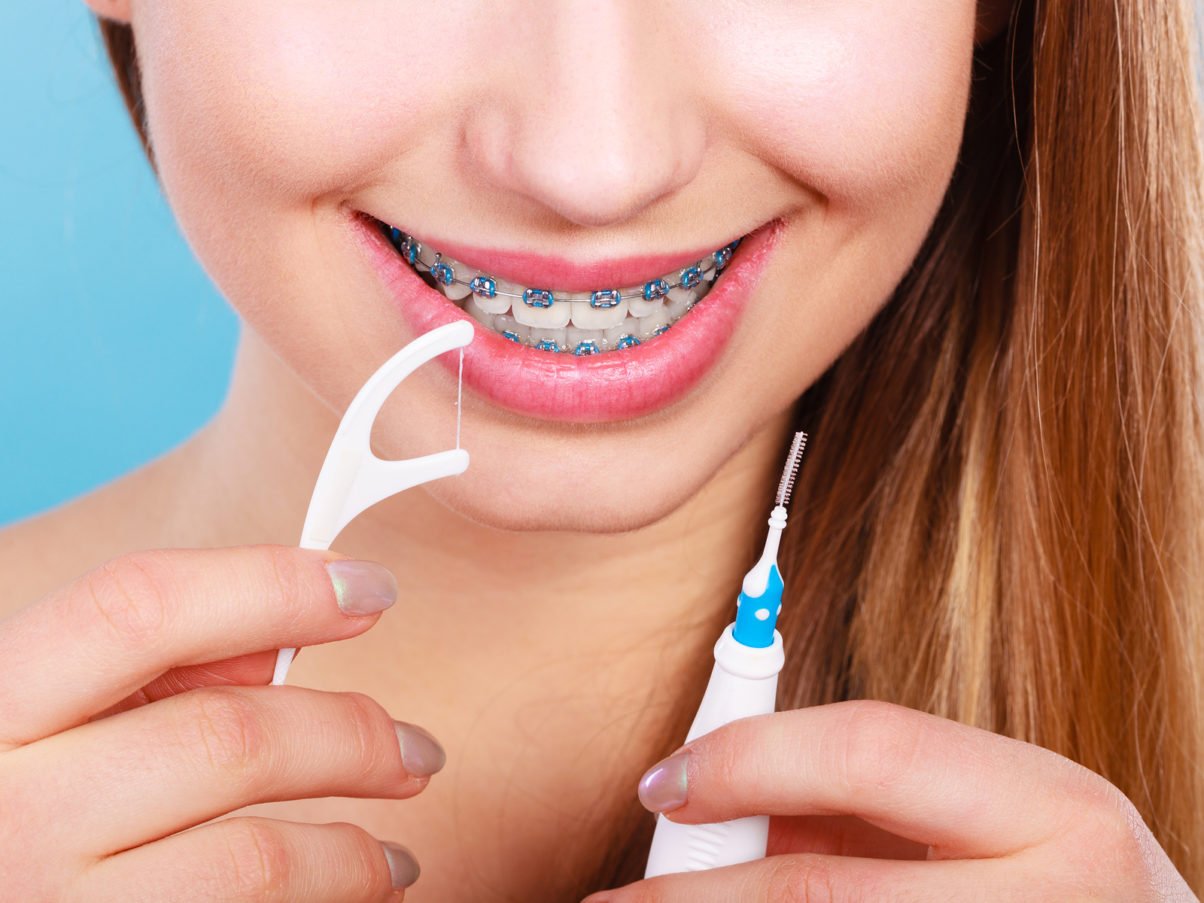
Suppose you want your teeth and gums to stay healthy, and brush and floss properly. Taking care of your teeth and gums is already a challenge, but adding braces to the mix adds another layer of complexity. Keep reading if you want to know how to floss while wearing braces. A dentist in Rockingham, NC can help you understand how to floss properly with braces.
Why flossing is crucial
Having braces increases the need for flossing because the increased surface area for bacteria to hide is a genuine concern. Inadequate regular flossing while wearing braces can have a detrimental effect on oral health and even cause problems such as:
- Dental illness
- Gum disease
- Teeth discoloration
- Bad breath
One of the best ways to remove plaque and food particles from between teeth is to use traditional flossing. A lot of major tooth issues can be avoided if you floss frequently. However, flossing can be a bit of a pain when you have braces. Cleaning in between teeth might become more of a challenge. It normally takes extra time to thread the floss along the brackets and wire as well.
Thus, set aside ten to fifteen minutes to clean your teeth while they are in braces. Flossing the conventional way requires nothing more than waxed floss. Unwaxed floss poses a tearing and tangling risk when used with metal braces.
What is the best way to clean between braces and floss?
- Cutting a length of floss between 18 and 24 inches is the initial step. The size of the floss is critical since it determines how fast and easily you can floss.
- The next step is to floss in between your teeth and the main wire. Always floss in front of a mirror for the best results. With its assistance, you may clean the surfaces more thoroughly. You can use the floss wire to identify specific areas that need cleaning.
- Using your index fingers, secure the floss ends. A firm grasp is necessary for a complete scrub.
- After that, gently push the floss in between the teeth. Gently work the floss up and down the sides of each tooth. To get the most out of your flossing, form an upside-down U shape around your upper teeth.
- Finally, take the floss out. Carefully remove it from the wire by unthreading it. Be cautious not to pull the floss out of the tooth at this point. The wire could come flying out of your braces bracket if you happen to knock it accidentally.
- You can now floss between each tooth by moving on to the next set of teeth. Although it may be difficult at first, flossing your teeth with braces will become second nature after you have followed the instructions above.
