

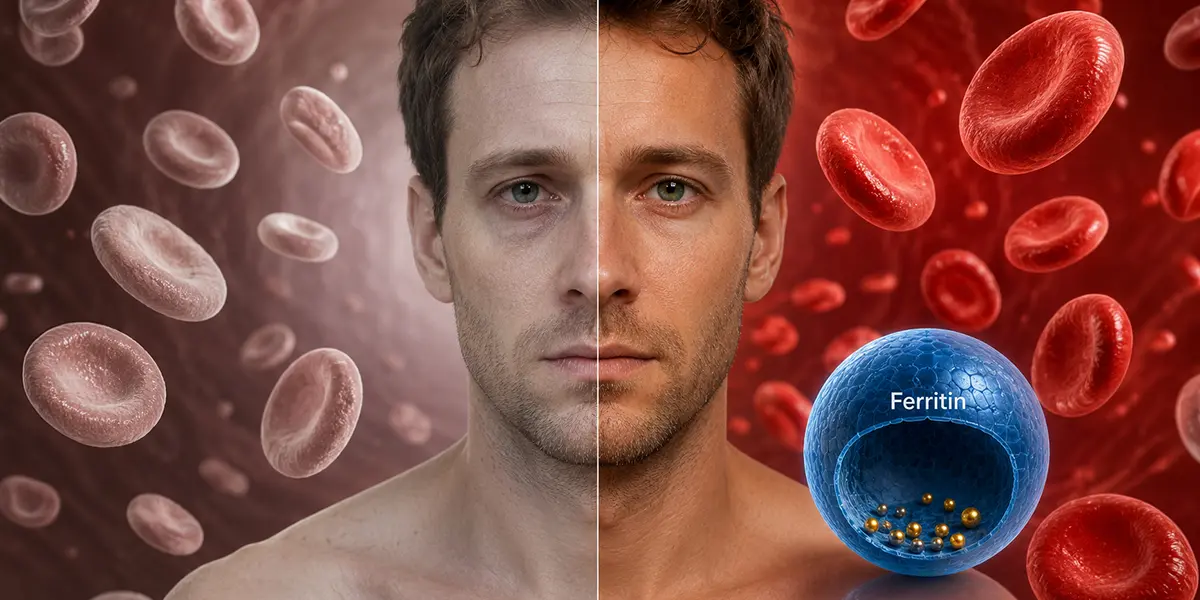
You drag yourself out of bed after eight hours of sleep feeling as though you never rested at all. Simple tasks, like climbing a flight of stairs, carrying groceries, or focusing through a routine afternoon meeting, require a monumental act of will. Your limbs feel heavy, your brain feels clouded, and your energy reserves seem completely drained.
Naturally, you make an appointment with your doctor. They run routine blood work, check your vital signs, and a few days later, the report arrives with a reassuring note: your numbers are completely normal, you are not anemic, and you are free to go about your life.
Yet the debilitating fatigue remains.
This scenario plays out in examination rooms every day across the country. Millions of individuals live with profound, daily exhaustion despite having pristine red blood cell counts. The culprit is often a widely overlooked and frequently misunderstood condition: iron deficiency without anemia. Understanding why this happens requires dismantling the persistent medical myth that iron only matters when your blood count crashes.
The Illusion of the “Normal” Blood Panel
When most physicians evaluate a patient for fatigue, the frontline diagnostic tool is a Complete Blood Count (CBC). This test measures the concentration of red blood cells, hematocrit, and hemoglobin—the iron-rich protein responsible for transporting oxygen from your lungs to the rest of your body.
If your hemoglobin falls below standard clinical thresholds, you receive a diagnosis of anemia. If your hemoglobin sits comfortably within the normal range, the possibility of iron deficiency is often crossed off the list entirely.
This approach misses the fundamental progression of how iron depletion occurs in the human body. Think of your body’s iron balance like a financial safety net. Hemoglobin represents the cash in your wallet that you spend on daily transactions, while ferritin represents your long-term savings account stored safely in your tissues and organs.
When your body enters a state of negative iron balance, it does not immediately drain the cash from your wallet. Instead, it systematically raids your savings account to keep circulating hemoglobin levels stable. Your bone marrow prioritizes red blood cell production above almost everything else, pulling every available molecule of iron from storage to maintain adequate oxygen-carrying capacity.
By the time your hemoglobin drops enough to trigger a diagnosis of anemia, your iron reserves have already been completely depleted for months, if not years. Iron deficiency without anemia occurs during that long, grueling intermediate phase where your savings account is completely empty, but your body is still desperately scraping together just enough cash to keep the lights on. You are functionally starved of iron at the cellular level long before your standard blood test raises a red flag.
Beyond Oxygen: How Iron Actually Fuels Your Biology
The pervasive medical focus on hemoglobin has created the false impression that iron’s only job is oxygen transport. In reality, iron is an indispensable biochemical cofactor required for hundreds of metabolic enzymes operating deep within your cells.
When your iron stores run dry, multiple biological systems begin to falter, long before your red blood cells fail.
The Breakdown of Cellular Energy
Inside almost every cell in your body sit hundreds of microscopic power plants called mitochondria. These organelles generate adenosine triphosphate (ATP), the universal molecular currency of physical and mental energy.
The biological engine inside your mitochondria—known as the electron transport chain—is lined with iron-sulfur clusters and iron-dependent proteins called cytochromes. Without sufficient iron, this molecular assembly line slows down. Your cells cannot efficiently convert the nutrients from your food into usable energy.
This cellular energy crisis is why people with low ferritin experience profound physical fatigue. Your muscles are not necessarily deprived of oxygen; rather, their microscopic engines simply do not have the raw catalytic materials required to generate force and stamina.
Brain Fog and Neurotransmitter Depletion
Iron is also heavily concentrated in the central nervous system, where it acts as an essential cofactor for two critical enzymes: tyrosine hydroxylase and tryptophan hydroxylase.
These enzymes govern the synthesis of your primary neurotransmitters:
-
Dopamine: Drives motivation, focus, executive function, and motor control.
-
Norepinephrine: Regulates alertness, mental clarity, and blood flow.
-
Serotonin: Influences mood stability, emotional resilience, and sleep architecture.
When brain iron stores fall, neurotransmitter production drops alongside them. This explains why iron deficiency without anemia so frequently masquerades as depression, generalized anxiety, apathy, or adult-onset attention deficits. The brain is not lacking willpower; it is operating with a depleted chemical toolkit.
Sluggish Thyroid and Temperature Regulation
Your thyroid gland sets the metabolic pace for your entire body, and it relies directly on iron to do its job. An enzyme called thyroid peroxidase (TPO) requires iron to synthesize active thyroid hormones from iodine.
Furthermore, the peripheral conversion of storage thyroid hormone (T4) into the active metabolic driver (T3) depends heavily on adequate iron availability. When ferritin plummets, your thyroid output downshifts, leaving you with classic hypothyroid symptoms like cold intolerance, dry skin, brittle hair, and a sluggish metabolism, even when your basic thyroid stimulating hormone (TSH) tests appear standard.
The Hallmarks of Non-Anemic Iron Deficiency
Because this condition is systematically underdiagnosed, recognizing the physical footprint of low tissue iron is crucial. The symptoms can be subtle and wide-ranging, often accumulating so gradually that people accept them as their baseline state.
Common signs of iron deficiency without anemia include:
-
Unrefreshing Sleep: Waking up just as exhausted as when you went to bed, regardless of how many hours you rested.
-
Air Hunger on Exertion: Feeling winded, breathless, or experiencing a racing pulse when walking up stairs or jogging, despite normal lung function and normal blood oxygen levels.
-
Restless Legs Syndrome (RLS): An irresistible, uncomfortable urge to move your legs in the evening or while lying in bed, frequently accompanied by creeping, crawling sensations in the calves.
-
Persistent Cold Intolerance: Having perpetually icy hands and feet, or feeling chilled when everyone else in the room is comfortable.
-
Diffuse Hair Shedding: Noticing significantly more hair accumulating in your brush or shower drain, as hair follicles prematurely exit the growth phase due to low iron stores.
-
Cognitive Lethargy: Struggling to recall words, hold thoughts in working memory, or maintain attention across long tasks.
-
Unusual Cravings (Pica): A distinct compulsion to chew on ice cubes, freezer frost, chalk, or raw starch.
The Ferritin Blind Spot: Deciphering the Lab Ranges
If iron deficiency without anemia is so disruptive, why is it routinely missed? The answer lies in how laboratory reference ranges are constructed.
To test for iron stores, a doctor must order a serum ferritin test. Ferritin is a circulating blood protein whose levels directly correlate with the total amount of iron tucked away in your liver, spleen, and bone marrow.
The standard reference interval for ferritin on most commercial lab panels is exceptionally broad, frequently spanning anywhere from 12 to 150 ng/mL for women and up to 300 ng/mL for men.
These ranges are calculated statistically based on the average values of the people who walk into testing laboratories, rather than what is biologically optimal for human vitality. A ferritin level of 14 ng/mL will rarely be flagged as abnormal by automated lab software because it sits inside the technical statistical curve.
From a physiological standpoint, however, a ferritin level of 14 ng/mL indicates severe, clinical tissue depletion.
Numerous clinical specialists consider a ferritin level below 30 ng/mL to be outright diagnostic of absolute iron deficiency. Furthermore, clinical experience consistently demonstrates that many individuals do not experience full relief from cognitive fog, exercise intolerance, and severe fatigue until their ferritin is restored to at least 50 to 100 ng/mL. Living with a ferritin of 18 ng/mL while being told your labs are normal is the clinical equivalent of driving a car whose fuel tank is hovering just above empty while the low-fuel indicator light is burned out.
The Inflammatory Trap
There is an additional diagnostic catch: ferritin is an acute-phase reactant. This means that when the body experiences active inflammation, an autoimmune flare-up, metabolic stress, fatty liver disease, or an infection, ferritin levels artificially spike as part of the immune response.
In someone dealing with systemic inflammation, a serum ferritin of 65 ng/mL may look reassuring, yet their actual usable iron stores could still be severely depleted. This is why evaluating ferritin in a vacuum can be deceptive.
Why Iron Stores Disappear
Iron does not vanish without a clear biological reason. The human body is remarkably conservative with its iron, recycling roughly 90 to 95 percent of it daily through the breakdown of aged red blood cells. When reserves drop, it is almost always driven by one of four mechanisms.
Chronic Blood Loss
The most frequent cause of iron depletion in premenopausal women is heavy menstrual bleeding (menorrhagia). Losing more than 80 milliliters of blood per cycle can easily outpace the amount of iron the digestive tract can absorb from food. Over years of monthly blood loss, the deficit compounds quietly until reserves are entirely tapped out.
In men and postmenopausal women, unexplained iron loss must always be investigated by a physician, as it frequently points to occult bleeding in the gastrointestinal tract from ulcers, polyps, or vascular malformations.
Impaired Gut Absorption
You can eat an iron-dense diet and still become profoundly deficient if your digestive system cannot absorb it. Iron absorption occurs primarily in the duodenum and upper jejunum, requiring an acidic stomach environment to reduce ferric iron into its absorbable ferrous form.
Conditions that blunt absorption include:
-
Celiac Disease: Blunting of intestinal villi destroys the cellular machinery needed to take up minerals.
-
Inflammatory Bowel Disease: Crohn’s disease and ulcerative colitis cause ongoing mucosal inflammation that limits absorption and causes micro-bleeding.
-
Chronic Antacid or PPI Use: Long-term use of proton pump inhibitors and H2 blockers suppresses stomach acid, dramatically reducing non-heme iron solubility.
-
Bariatric Surgery: Procedures like gastric bypass reroute food away from the primary sites of iron absorption.
Dietary Gaps
Dietary iron exists in two distinct forms: heme iron (found exclusively in meat, poultry, and seafood) and non-heme iron (found in plants, legumes, and fortified grains).
Heme iron is highly bioavailable, absorbed at rates between 15 and 35 percent, and is relatively unaffected by other dietary compounds. Non-heme iron, by comparison, is absorbed at rates between 2 and 10 percent.
Furthermore, non-heme iron absorption is heavily inhibited by phytates in grains, polyphenols in tea and coffee, and calcium in dairy. Those eating plant-exclusive diets without deliberate nutritional planning must consume roughly double the amount of dietary iron compared to omnivores to account for these absorption bottlenecks.
Athletic Depletion
High-intensity athletes, particularly endurance runners, burn through iron rapidly. Foot-strike hemolysis—the physical crushing of red blood cells in the soles of the feet with every stride—destroys iron-bearing cells.
Additionally, intense physical exertion triggers a surge of inflammatory signaling molecules, primarily interleukin-6, which in turn causes the liver to release a master hormone called hepcidin. Hepcidin acts as a biological gatekeeper, locking iron away inside cells and temporarily blocking intestinal absorption for hours following hard exercise.
A Practical Roadmap to Restoring Your Iron Stores
Recovering from iron deficiency without anemia requires patience, precise testing, and a disciplined approach to supplementation. You cannot solve a depleted tissue reserve with an extra serving of spinach; rebuilding cellular iron requires an intentional clinical strategy.
Step 1: Secure a Comprehensive Iron Panel
Never settle for a simple CBC. Ask your healthcare provider to run a complete, multi-marker panel:
-
Serum Ferritin: To evaluate long-term storage.
-
Serum Iron: To check circulating iron levels.
-
Total Iron-Binding Capacity (TIBC): Measures the capacity of transferrin to bind iron (elevated numbers typically point to low iron stores).
-
Transferrin Saturation (% Sat): The percentage of transport proteins carrying iron; anything below 20 percent strongly suggests functional iron deficiency, regardless of what your ferritin says.
-
High-Sensitivity C-Reactive Protein (hs-CRP): To rule out hidden systemic inflammation that could be artificially inflating your ferritin result.
Step 2: Choose the Right Form of Supplementation
The standard medical prescription for iron has long been high-dose ferrous sulfate. While inexpensive, ferrous sulfate is notorious for causing gastrointestinal side effects, including severe constipation, nausea, abdominal cramping, and dark stools, leading many people to abandon treatment early.
More modern formulations, particularly iron bisglycinate (chelated iron), are bound to glycine molecules. This chelation allows the iron to pass gently through the stomach and absorb directly through the intestinal wall, causing significantly fewer digestive complaints at therapeutic doses.
Step 3: Outsmart the Hepcidin Spike
For decades, patients were told to take their iron supplements two or three times a day. Modern biochemical research has turned this practice on its head.
When you take a moderate-to-high dose of iron, your body perceives the sudden influx and releases hepcidin within a few hours to protect itself from iron toxicity. This elevated hepcidin remains in your system for roughly 24 to 48 hours, actively blocking your intestines from absorbing subsequent iron doses.
Because of this mechanism, taking iron every other day (alternate-day dosing) often results in equal or superior total iron absorption compared to daily dosing, with dramatically fewer stomach side effects. Taking your dose in the morning, when hepcidin levels are naturally at their lowest daily point, further maximizes absorption.
Step 4: Master the Co-Factors
Absorption efficiency depends heavily on what shares space in your stomach:
-
Pair with Vitamin C: Ascorbic acid reduces iron to an easily absorbable form and prevents it from binding to inhibitors. Take your iron alongside 200 to 500 mg of vitamin C or a glass of citrus juice.
-
Separate from Inhibitors: Keep your iron supplement at least two hours away from coffee, black tea, dairy products, calcium supplements, eggs, and antacid medications. The tannins, polyphenols, and calcium in these items bind tightly to iron, rendering it insoluble and unabsorbable.
Step 5: Consider Intravenous Iron When Necessary
For individuals with severe gut malabsorption, inflammatory bowel diseases, unmanageable oral side effects, or those whose ferritin has dropped into single digits, oral supplementation can take six months to a year to move the needle.
In these situations, intravenous (IV) iron infusions bypass the gastrointestinal tract entirely, delivering iron directly into the circulation to rapidly restock depleted organs and bone marrow. Modern IV iron formulations are widely utilized, safe, and can dramatically resolve severe symptoms within a matter of weeks under proper medical supervision.
Living in an unyielding state of fatigue is not something you have to accept as a normal part of aging, stress, or a busy lifestyle. If your routine lab work came back clean, but your body continues to signal that its engine is stalling, do not ignore that intuition. Request a full iron panel, look past the standard automated reference ranges, and investigate your ferritin. Restoring your cellular iron stores may be the missing key to finally reclaiming your energy, mental clarity, and quality of life.